Costa Rica
Sovereign AI, delivered as part of the deal.
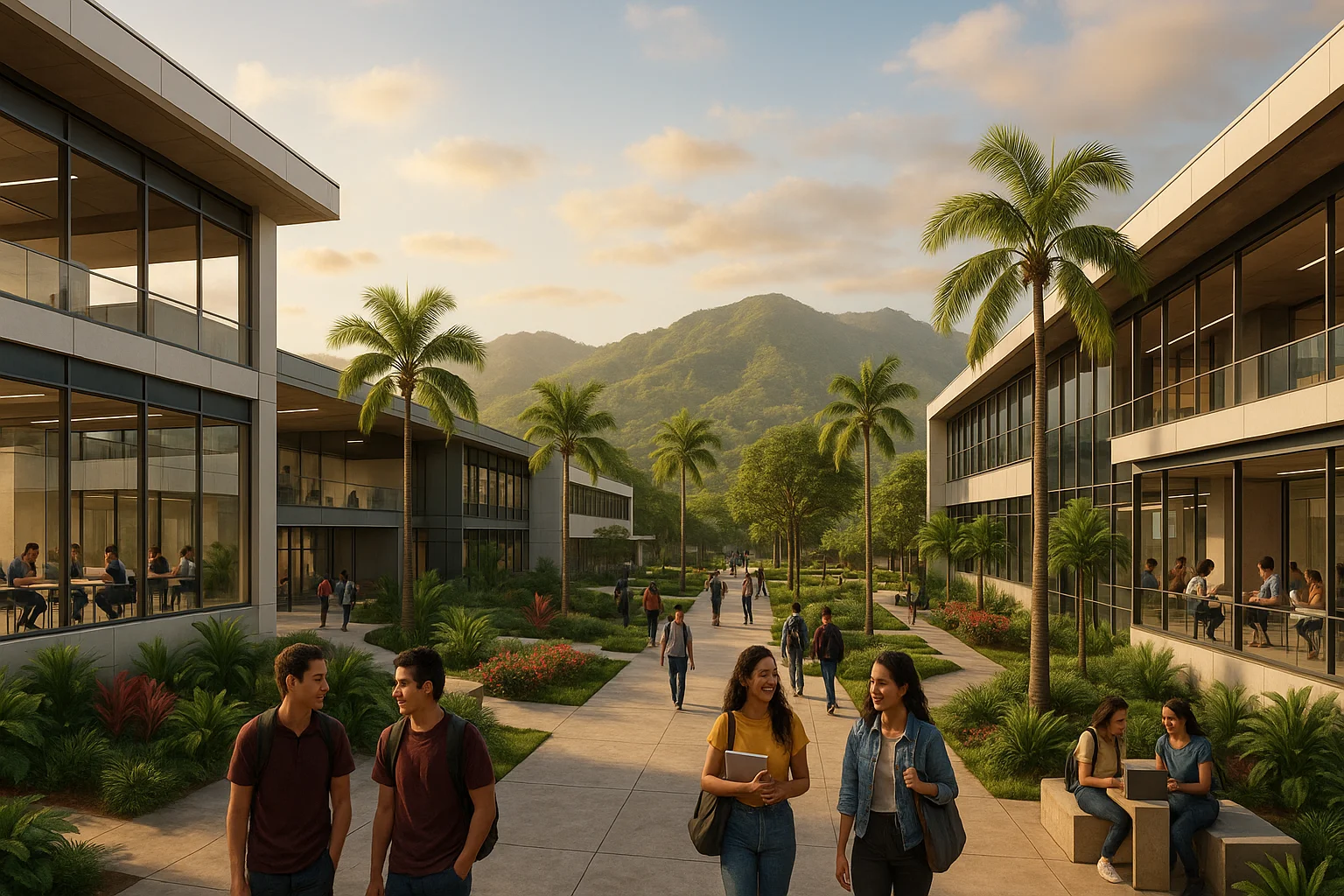
Costa Rica gets a national AI capability on trusted open models, free to the state and its citizens, staffed by graduates of a tuition-free technology university on the campus, and eventually operated by them. That is what a small, stable, US-aligned democracy gets from hosting the first gigawatt-scale AI campus in Central America.
The offer
What Costa Rica receives.
Government · free, national and municipal
Agency assistants, document and case processing, translation, speech and citizen-service tools on a segregated tenancy with data residency in-country. Free to the national government and to municipalities.
Citizens · a free national assistant
Spanish-first, available to every resident, with usage limits that keep it durable. The pattern used by the most successful national programs, applied to a country of 5.2 million.
Business and universities · free base, paid upgrades
Free base tier for Costa Rican businesses and universities; paid tiers for higher limits, fine-tuning and dedicated capacity. The paid tiers fund the operation so free is not a slogan.
Talent · Luxe University
Tuition-free for Costa Ricans. NVIDIA curricula and a peer-taught model; the first cohorts are hired into the sovereign operation and the campus. International students pay tuition.
How it is built
Trusted models, a Costa Rican foundation, a handover on milestones.
Model layer
Open-weight models from the US ecosystem (NVIDIA's Nemotron family, with Spanish-first open models for depth), adapted to Costa Rican Spanish with the synthetic-data methods used for Brazil and Vietnam. No models from restricted jurisdictions in the sovereign tier.
Governance
A Costa Rican public-benefit foundation holds the public allocation and the service agreements. Luxe operates it under contract for the first years; graduates staff it; operating control transitions on milestones. Government seats on the board. Luxe retains the infrastructure.
Capacity
A dedicated sovereign AI zone of 5–20 MW, physically and logically segregated. A national assistant at scale needs a small fraction of that; the reserve leaves room for government workloads and national fine-tuning runs.


Precedents: Denmark's foundation-held national supercomputer, Armenia's developer-anchored national AI program, and Canada's 2026 sovereign data-centre framework. Costa Rica's would be the first in Central America.
Jobs and the region
A third economic pillar for Guanacaste.
15,000+ direct and indirect jobs at full build-out across construction, operations, the energy park, the university and the campus layers, in a province that today depends on tourism and agriculture. A water-neutral design, dry cooling, and community benefits agreed with the host cantons before land closes.

Institutional contact