Power
Gigawatt-scale power, owned outright.
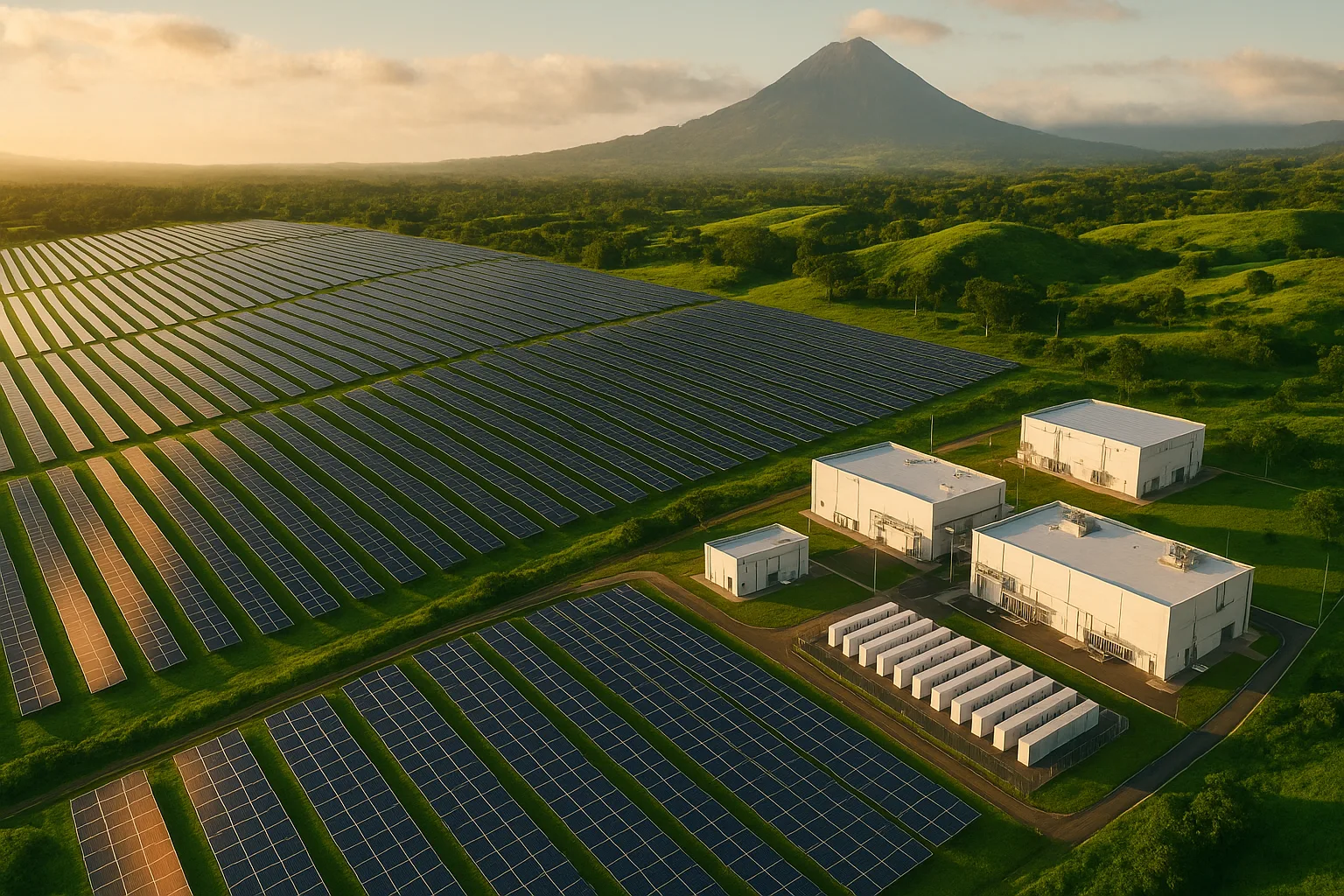
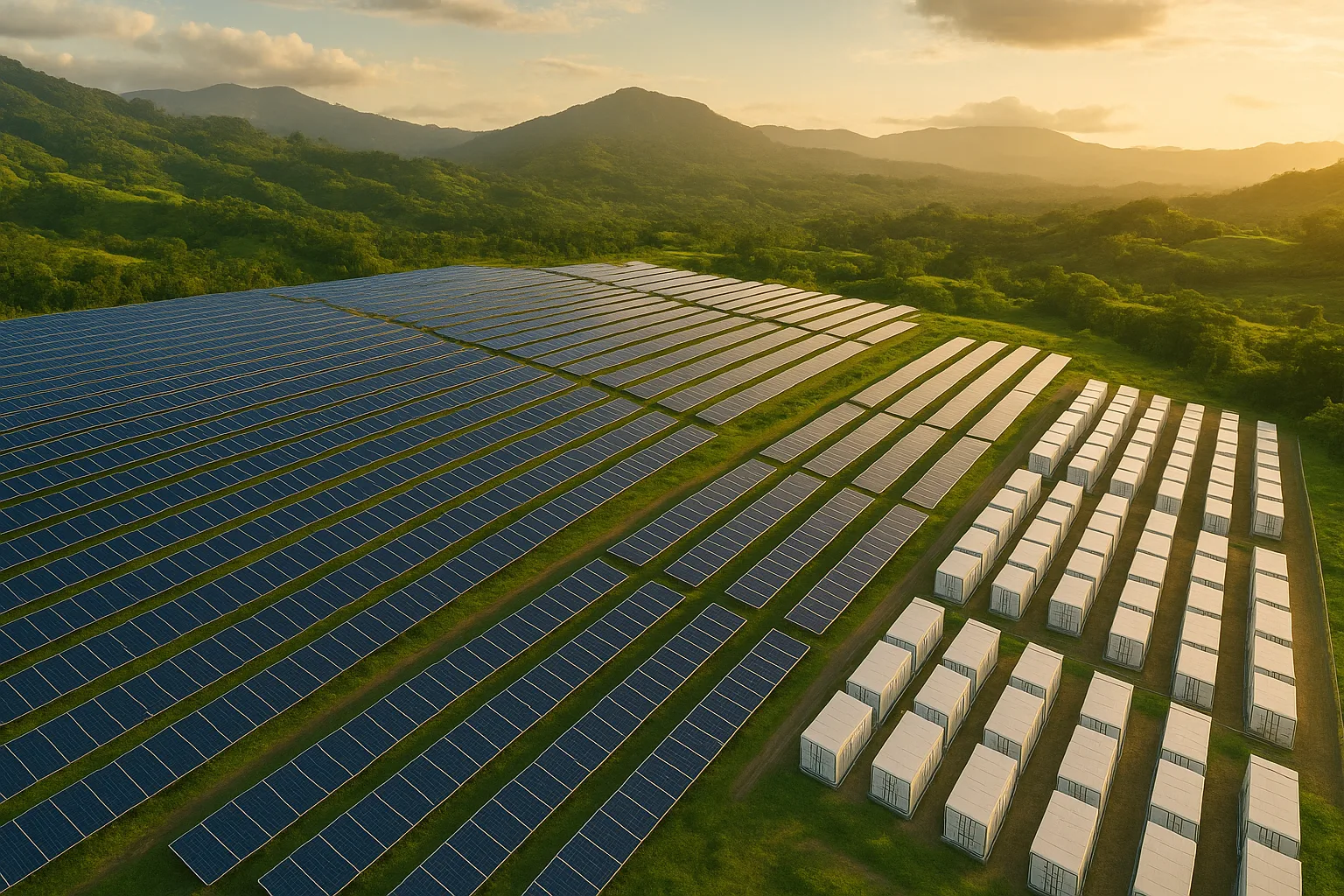
A 1200 MW facility running 24/7 needs its own gigawatt-scale plant. Ours is 6–7 GW of single-axis-tracked solar, 20–30 GWh of containerized LFP storage, a private 230 kV substation, and renewable-fuel firming for the wet season. Nothing on the critical path belongs to anyone else.
Design basis
Sized for Guanacaste, not for the desert.
The comparable
Masdar / EWEC Abu Dhabi: 5.2 GW solar + 19 GWh storage delivering 1 GW around the clock; $6.1B, financial close July 2026. It is the template for the supply chain and the financing, and its ratio (5.2× solar to load, 19 hours of storage) was engineered for desert sun with no wet season.
The adjustment
Guanacaste has the best solar resource in Costa Rica and a real wet season. We carry 6–7 GW (5–6× load) and 20–30 GWh (16–24 hours) to reach roughly 90% solar-direct supply, and we say so.
The last ten percent
Multi-day wet-season deficits are firmed by renewable-fuel generation we own, not by the grid. Going from 90% to 99% by storage alone would roughly double the battery; nobody has financed that, and we do not pretend to.
A bankable P50/P90 yield study (10+ years of satellite data) is the first engineering deliverable; the ratio above is the design basis it will confirm or adjust.
Speed
Procurement sets the schedule.
High-voltage transformers and switchgear are the long pole in every gigawatt project on earth. Ours are ordered at notice to proceed, before land closes. The first compute and power blocks energize together inside 18 months; blocks repeat after that.
Order 1 · High-voltage gear
230 kV switchgear and 1,200+ MVA of transformers. Western vendors quote four to five years; the manufacturers we specify deliver in 10–18 months. Ordered on letter of intent.
Order 2 · Storage
Factory-integrated AC blocks with power conversion and medium voltage fitted, split across three suppliers so no single line slot gates the schedule.
Order 3 · Modules and trackers
An oversupplied market. Gigawatts ship in months. Not a constraint, and not where the attention goes.
In parallel · Three EPC lots
Solar, storage and halls built by parallel contractors with a completion guarantee, on the model the fastest gigawatt-hour programs in the world have used since 2024.
Logistics and structure
Sourced direct, landed duty-free, owned inside the free zone.
Direct from the manufacturers
Modules, storage, power conversion, trackers and high-voltage gear are contracted directly with the Tier-1 manufacturers who supplied the Abu Dhabi and Saudi programs, on international (IEC) specifications.
Landed on the Caribbean side
Container volumes move through the modern deep-water terminal at Moín; heavy transformer cargo gets its own berth and route survey to Guanacaste. A twenty-gigawatt-hour program is roughly four thousand containers over a year of steady flow.
Free-zone structure
Costa Rica's trade agreement with China and its free-zone regime put solar and storage equipment at zero duty when the plant is structured as part of the campus operation. The importer and the plant are set up with counsel before the first purchase order.
Why this and not the grid
Costa Rica's grid is 98.6% renewable and about 1.9 GW at peak.
It is a superb backup and an impossible primary supply for a gigawatt campus. The national utility is itself forecasting a supply gap for 2027–2029. A campus that brings its own power takes nothing from the country and adds a backup interconnect to the Guanacaste corridor.
98.6%
National grid renewable share in 2025. A superb backup; not a primary supply for a gigawatt.
2027–2029
Supply-gap window the national utility itself is forecasting.
0%
Duty on solar and battery equipment under the China FTA and the free-zone regime, correctly structured.
Regulatory path: a fully islanded, non-exporting self-supply plant is the structure that fits current Costa Rican law; the framework for it at this scale is negotiated with the government, and the sovereign AI offer is part of that conversation.